PT-141 (Bremelanotide) — Complete Research Guide 2026
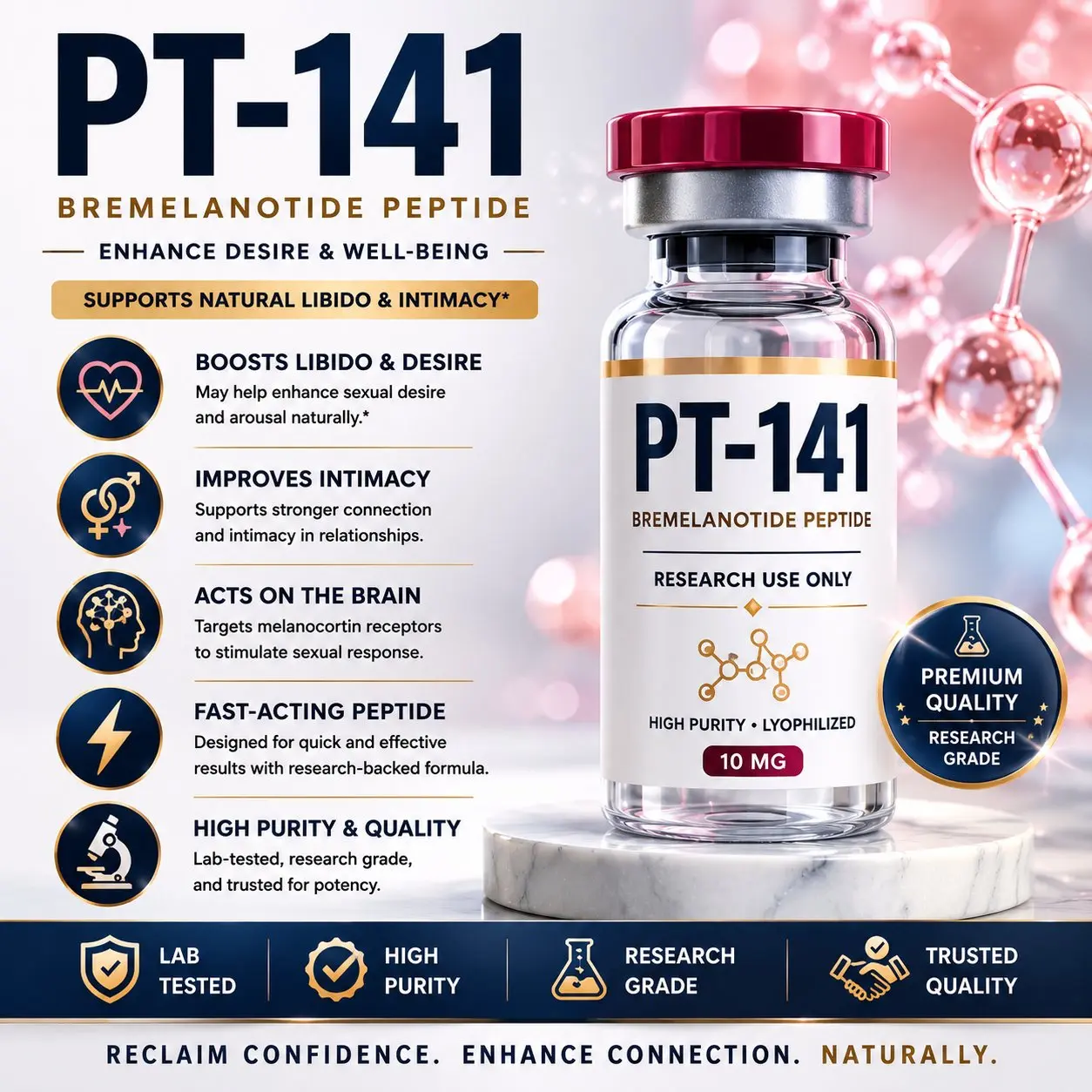
PT-141, known generically as Bremelanotide, is one of the most uniquely positioned peptides in the research catalogue — it works centrally through the brain rather than through the vascular system, making its mechanism of action fundamentally different from anything that came before it. This complete 2026 guide covers everything you need to understand about this remarkable compound.
🧠 Key Distinction: PT-141 works by activating melanocortin receptors (MC3R and MC4R) in the brain's hypothalamus and limbic system. This central mechanism is what makes it different from all other options in this category — it addresses the neurological rather than the physiological component.
The Science Behind PT-141
PT-141 is a synthetic analog of the naturally occurring peptide hormone alpha-melanocyte-stimulating hormone (α-MSH). It was originally developed from research into Melanotan-II (MT-2) — researchers studying MT-2 for tanning effects noted a significant secondary effect that led to the isolated development of PT-141 as a dedicated compound targeting melanocortin receptors MC3R and MC4R.
These receptors are found in the hypothalamus and limbic areas of the brain — regions directly involved in motivation, reward and autonomic nervous system regulation. PT-141's activation of these pathways through the central nervous system is what makes its effects distinctly different from peripherally-acting alternatives.
What to Expect from PT-141 Research Protocols
Timing
PT-141 is typically administered 2–4 hours before the intended observation window in research protocols. Effects typically begin within 30–60 minutes of administration and can persist for several hours, making timing an important variable in research design.
Research Dosing Range
Research literature documents protocols ranging from 0.5mg to 2mg per administration. Most research protocols begin at the lower end of this range. The compound is active at relatively low doses, and most research finds diminishing returns above 1.5–2mg while side effect frequency increases.
Side Effect Profile in Research Settings
The most commonly documented side effect in research settings is mild-to-moderate nausea, occurring in a portion of subjects particularly at higher doses and most pronounced in the first 30–60 minutes post-administration. This typically resolves without intervention and diminishes in subsequent uses. Flushing and mild transient increases in blood pressure have also been documented in some research subjects.
PT-141 vs Alternatives
The fundamental distinction between PT-141 and all other compounds in this research space is the mechanism of action:
- PT-141 (central mechanism): Acts in the brain via melanocortin receptors — does not depend on the vascular system functioning correctly, making it suitable for research subjects where vascular function is compromised
- PDE5 inhibitors (peripheral mechanism): Act on smooth muscle in the vascular system — require adequate vascular function and are contraindicated with nitrates
This distinction is significant in research contexts where the research population includes subjects with conditions affecting vascular health.
PT-141 in Female Research Subjects
One of the most notable aspects of PT-141 research is its documented effects in female subjects — it was the first compound in this category to show statistically significant effects in female research populations. FDA-approved pharmaceutical Bremelanotide (Vyleesi) is specifically approved for premenopausal women, which reflects the depth of research into PT-141's effects across both male and female subjects.
Storage and Handling
PT-141 is supplied as lyophilized powder and must be reconstituted with bacteriostatic water before use in research settings. Once reconstituted, refrigerate at 2–8°C and use within 30 days. Protect from light. For reconstitution guidance, see our complete reconstitution guide.
Frequently Asked Questions
Is PT-141 the same as Bremelanotide?
Yes. PT-141 is the research compound name for Bremelanotide — they are the same compound. The pharmaceutical version (Vyleesi) is the FDA-approved form sold through licensed pharmacies. PT-141 from PEPTARA is the research grade version, sold for research purposes only.
How does PT-141 differ from MT-2 (Melanotan II)?
MT-2 is the parent compound from which PT-141 was derived. MT-2 activates a broader range of melanocortin receptors including those involved in skin tanning and appetite suppression. PT-141 is more selective, targeting primarily MC3R and MC4R with reduced activity at other receptors — making it more targeted in its research application.
Buy PT-141 Research Peptide
From $60 per 10mg vial · 99%+ purity · COA included · Cold-chain from North Carolina
Shop PT-141 →