The Anti-Aging Skin Peptide Revolution
The aesthetic medicine industry has been dominated for decades by two approaches to wrinkle reduction: toxin-based paralysis (Botox) and filler-based volume replacement. Both require a clinician, both carry risks, and both provide temporary results that require ongoing maintenance. Research peptides are offering a third pathway: biochemically-driven skin improvement that works with your body's own mechanisms rather than against them.
Snap-8 is one of the most interesting compounds in this space — and one that directly positions itself against Botox in terms of its mechanism of action. This guide examines the evidence honestly.
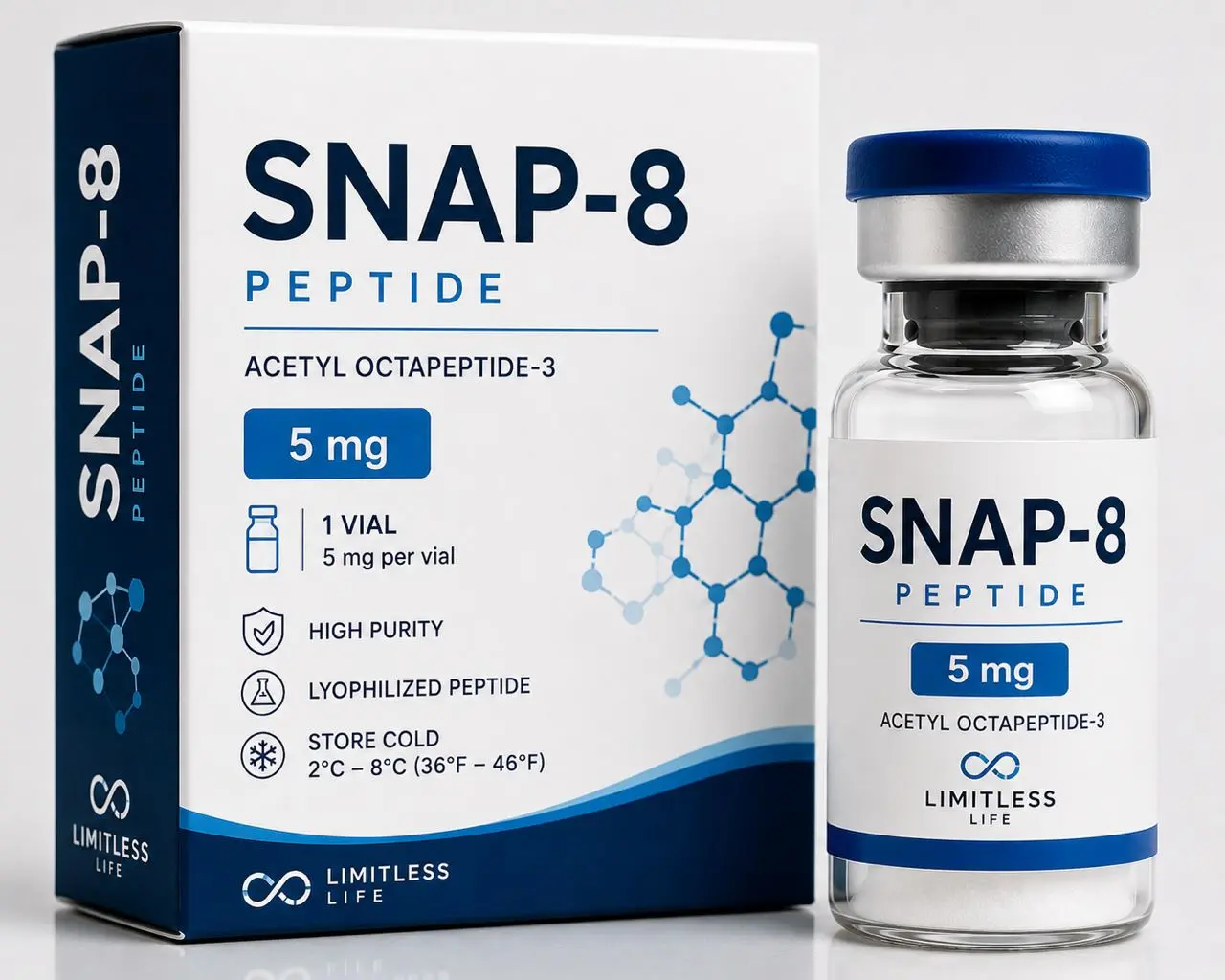
What Is Snap-8 and How Does It Work?
Snap-8 is an octapeptide (8 amino acid chain) that is a shortened version of a peptide from SNAP-25 — one of the proteins involved in the SNARE complex that mediates neuromuscular signaling. To understand why this matters, a brief explanation of how Botox works:
Botox (Botulinum Toxin Type A) works by cleaving SNAP-25 protein, which prevents the release of acetylcholine at the neuromuscular junction — the signal that tells facial muscles to contract. With the signal blocked, the muscle cannot contract and expression wrinkles cannot form. The result is smooth skin, but at the cost of natural facial expression.
Snap-8 works through a related but distinctly different mechanism: rather than cleaving SNAP-25, it competes with it for binding sites in the SNARE complex. This competitive inhibition reduces the efficiency of acetylcholine release — but does not eliminate it entirely. The result is reduced muscle contraction intensity rather than complete paralysis. Expression lines become shallower and less pronounced, but natural expression is preserved.
Snap-8 vs Botox — Direct Comparison
| Factor | Snap-8 | Botox |
|---|---|---|
| Mechanism | Competitive SNARE complex inhibition — reduces muscle signal efficiency | SNAP-25 cleavage — complete neuromuscular block |
| Administration | Research compound — topical or injectable | Injected by clinician only |
| Effect on expression | Reduces intensity — expression preserved | Eliminates expression in treated area |
| Onset of action | 4–6 weeks (gradual) | 48–72 hours (rapid) |
| Duration | Ongoing with continued use | 3–6 months per treatment |
| Paralysis risk | None — partial inhibition only | Yes — temporary paralysis is the mechanism |
| Cost | From $50 per vial (research) | $300–$800+ per treatment session |
| Results quality | Natural, gradual improvement | Dramatic but artificial-looking |
🔬 Key Finding: A double-blind, placebo-controlled study on Snap-8 showed reduction in wrinkle depth of 52% vs 28% for placebo at 28 days. While not directly comparable to Botox's more dramatic immediate effect, the result was statistically significant and achieved without paralysis or professional administration.
The Research Evidence for Snap-8
Clinical Study on Expression Wrinkles
The most-cited Snap-8 study involved 40 female volunteers applying a Snap-8 formulation twice daily for 28 days. Results showed measurable reduction in wrinkle depth around the eyes and forehead — areas most affected by repetitive expression muscle activity. The effect was dose-dependent and continued to improve throughout the study period, suggesting ongoing benefit with extended use.
Comparison to Argireline
Argireline (Acetyl Hexapeptide-3) is an older hexapeptide with a similar SNARE-inhibiting mechanism. Snap-8 is an 8-amino-acid version with greater receptor affinity. Studies comparing the two consistently show Snap-8 producing superior wrinkle reduction, making it the more potent option of the two peptides in this class.
The Comprehensive Skin Peptide Stack
Snap-8 addresses expression-line depth through neuromuscular modulation. But expression lines are only one component of facial aging. A comprehensive approach targets multiple mechanisms simultaneously:
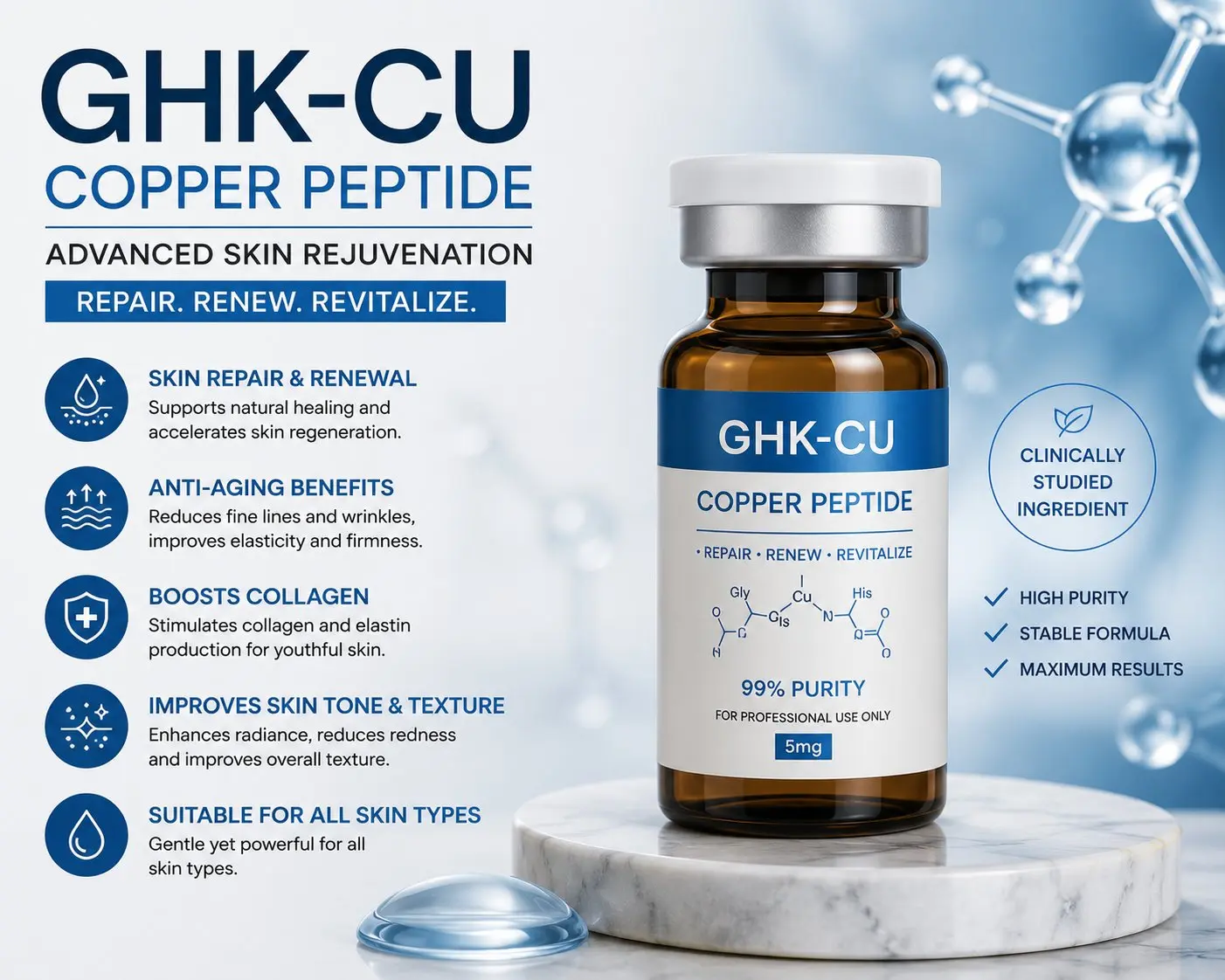
Snap-8 + GHK-CU Copper Peptide
GHK-CU (Copper Peptide) is arguably the most researched skin peptide overall. It promotes collagen and elastin synthesis, activates tissue remodelling enzymes, has significant anti-inflammatory effects and has shown wound healing acceleration in multiple studies. While Snap-8 reduces the muscle-driven deepening of expression lines, GHK-CU rebuilds the structural protein matrix of the skin — addressing two different contributing factors to aged skin simultaneously.
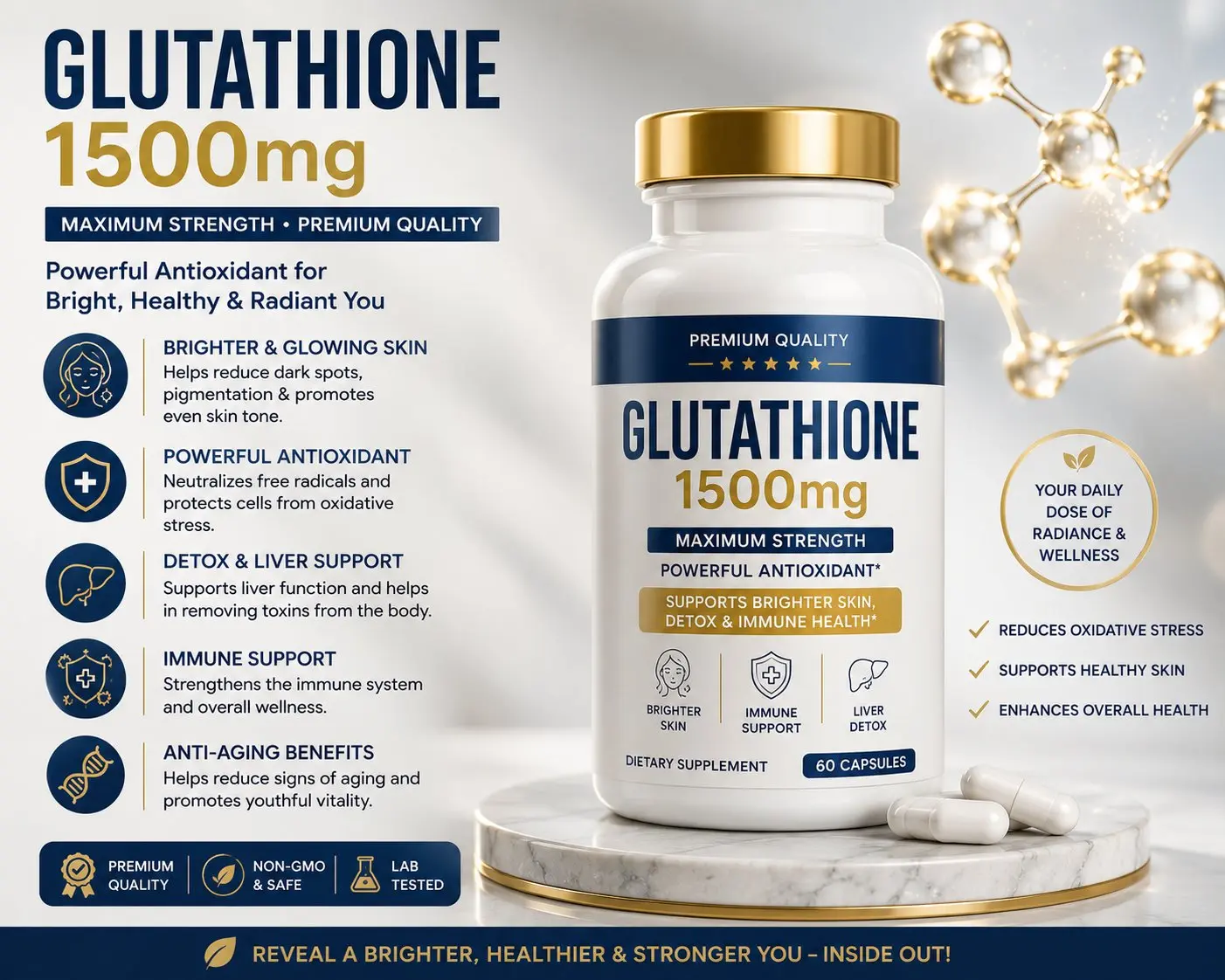
Snap-8 + Glutathione
Glutathione is the body's master antioxidant and a key determinant of skin brightness and tone. Oxidative stress from UV exposure and environmental pollution accelerates skin aging at the cellular level — Glutathione directly counteracts this. The combination of Snap-8 for wrinkle reduction and Glutathione for overall skin luminosity and protection addresses both the structural and pigmentation components of skin aging.
Botulinum Toxin (Snap-8's Complement)
PEPTARA Health also supplies Botulinum Toxin as a research compound. For researchers studying the full spectrum of neuromuscular signaling approaches to skin aging, having both Snap-8 (partial inhibitor) and Botulinum Toxin (complete inhibitor) allows comprehensive protocol comparison.
Is Snap-8 Right for Your Research Protocol?
Snap-8 is the appropriate choice when:
- The goal is natural-looking wrinkle reduction without facial movement restriction
- Research involves long-term skin quality improvement rather than acute correction
- The subject prefers a gradual, sustainable result over dramatic but temporary changes
- Cost efficiency over multiple months is a consideration — ongoing Snap-8 use is dramatically cheaper than repeated Botox treatments
Shop Skin Peptides — Snap-8, GHK-CU, Glutathione
Complete skin peptide range from PEPTARA Health. All 99%+ purity, COA included, cold-chain shipped from North Carolina.
Browse Skin Peptides →